

The Hidden Skills Your Workforce Already Has but Can’t See

Hey all, welcome back to GoFIGR (go figure!), your inside look at the evolving world of HR, talent, and AI-driven workforce transformation.
Today’s issue is about a problem every company faces but few know how to solve. Organizations are spending millions hiring externally to fill skill gaps, yet the talent they need is often sitting right in front of them. The reason they don’t see it? Skills are still hidden under outdated job titles and rigid career paths.
This isn’t just about efficiency. It’s about equity. Certain employees often those who are less visible or lack traditional credentials aren’t getting the same career opportunities, even when they have the right skills. AI is starting to change this, but most organizations are still focused on automation rather than using AI to actually uncover and activate the skills they already have.
In this issue, I’m breaking down why organizations fail to recognize hidden talent, the cost of skill blindness, and how AI can help create fairer, more effective career mobility.
Let’s dive in.
The Talent Is There. Companies Just Can’t See It
Think about the last time your company needed to fill a critical role. Did leadership immediately look externally? Most companies do. But often, the right person is already on the team in a role where no one expected to find them.
Organizations are still trapped in job title thinking, assuming that an employee’s current position represents the full extent of their abilities. But job titles don’t tell the whole story.
A customer service rep who has been analyzing data trends and improving workflows could be a great data analyst. An IT manager who naturally bridges business and technology could be exactly what an AI strategy team needs. A marketing coordinator who has been leading cross-functional projects and mentoring junior staff has already demonstrated the qualities of a strong product manager.
Yet these employees remain stuck because their skills aren’t visible to decision-makers.
A major part of the problem is employee confidence. Research shows that 35% of employees don’t feel confident in their own skills, meaning they’re not actively seeking out career shifts or pushing for new opportunities. At the same time, companies continue to invest millions in external hiring, believing they need to bring in fresh talent when, in reality, the skills they need already exist within the organization.
Skill blindness is costing organizations more than they realize. They are losing time and money searching for talent externally while high-potential employees go underutilized or leave for better opportunities. This is a fundamental flaw in how organizations approach workforce development and career mobility.
Who Gets Seen and Who Doesn’t
Hidden skills aren’t the same for everyone. In many organizations, the question isn’t just about what skills exist, but about who gets recognized for having them.
The AI industry is a clear example of this. There is a 42% gender gap in AI-skilled workers, despite no evidence that men are inherently better at learning AI. Women in technical fields are often overlooked for high-skill projects and passed over for promotions, even when they already have the expertise. The issue isn’t ability. It’s visibility and access.
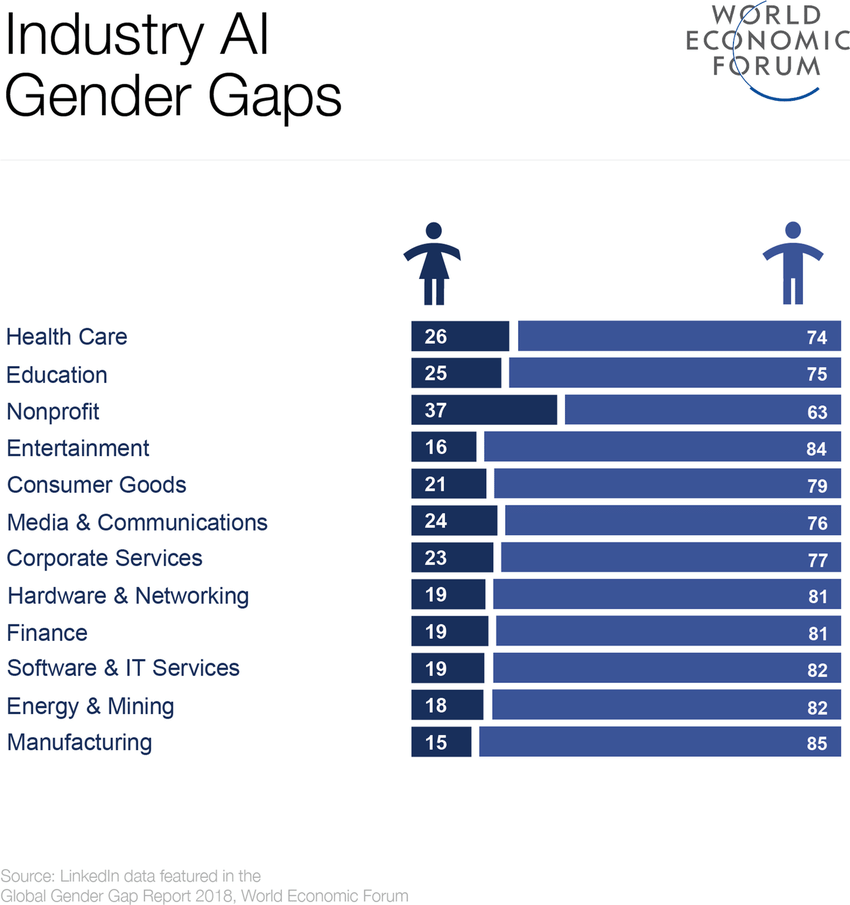
The same pattern plays out across age, race, and personality type. The training gap between generations is another example. Forty-five percent of Gen Z employees actively seek out new skills training, while only twenty-two percent of Baby Boomers do the same. Older employees are often assumed to be set in their ways, even when they have the adaptability to transition into new roles.
Bias continues to shape career mobility. Managers promote people who remind them of themselves. Employees who self-advocate are seen as high potential. Internal mobility is still largely based on tenure and relationships rather than capabilities.
Companies aren’t just missing out on hidden skills. They’re missing out on entire segments of their workforce who could be driving innovation and growth. If organizations don’t fix this, skills-based hiring and internal mobility won’t be truly equitable. They’ll just reinforce existing biases, only under a new label.
How AI Makes Skills Visible
Organizations struggle to recognize and leverage hidden skills, but AI presents an opportunity to fix what traditional workforce systems have consistently missed.
Seventy-six percent of HR leaders believe AI will significantly impact workforce planning. Most companies, however, are still focused on using AI for task automation and hiring efficiency instead of using it to unlock the skills already sitting within their workforce.
Some companies are starting to use AI to identify skill gaps, but the adoption is still slow. Fifty-three percent of organizations use AI for skills gap analysis, but few integrate those insights into actual workforce planning. Retention increases by fifty-one percent when employees’ skills are recognized and valued, but most organizations still lack the tools to surface those skills in the first place.
This is where AI can bridge the gap between what employees can do and what decision-makers actually see. Unlike traditional workforce planning, which relies on resumes and job titles, AI can analyze real skill patterns. It can identify employees who are already doing tasks outside their defined role, highlight adjacent skills that make upskilling easier, and translate non-traditional qualifications into recognized career pathways.
Where human systems rely on perception, AI relies on patterns.
Organizations have always had employees with unrealized potential, but their career trajectories have largely depended on who noticed them, who vouched for them, and whether they had the confidence to self-advocate. AI removes these barriers by surfacing real skill data and presenting objective insights. It helps organizations recognize high-potential employees who might otherwise be overlooked, recommend realistic career paths, and reduce reliance on bias-driven promotions and hiring decisions.
The question isn’t whether AI can help solve the problem of hidden skills. It’s whether companies will use it to make workforce development more equitable, not just more efficient.
Turning Hidden Talent Into Business Impact
Recognizing hidden skills is only the first step. The real challenge is turning that knowledge into action.
Most companies know they need to take a skills-based approach, but the gap between awareness and implementation is massive.
Sixty-seven percent of organizations cite a shortage of AI-related skills as a major barrier to transformation, yet they often overlook internal employees who could be upskilled instead of hiring externally. While a majority of companies are adopting AI for skills analysis, a significant gap exists between AI adoption and effective integration of those insights into workforce decisions, suggesting that many organizations struggle to fully leverage AI's potential in talent management. Valuable data is collected but not acted upon.
This is why skill invisibility isn’t just a workforce problem. It’s a business problem. Companies that can’t see or activate their employees’ full capabilities waste millions on external hiring, lose top talent, and stall innovation.
What Organizations Can Do Today
Start shifting from role-based to skills-based thinking. Stop defining employees solely by their job titles. Use AI to analyze what tasks they actually perform, what skills they apply daily, and how those skills connect to higher-value roles.
Use AI to map skill adjacencies. Instead of assuming a skills gap means hiring externally, AI can identify which employees are closest to the required skill set and what targeted upskilling they need to move into critical roles.
Make internal mobility a data-driven process. Instead of relying on managers’ subjective views of who is ready, AI can match employees to opportunities based on real skill data, ensuring promotions and role transitions are equitable.
How GoFIGR Helps
This is exactly what GoFIGR was built for. Instead of relying on manual skill assessments or outdated career pathing, GoFIGR’s AI platform analyzes real employee skill data, maps adjacencies, predicts workforce trends, and surfaces hidden talent.
Companies that use this kind of data-driven workforce transformation don’t just retain more employees. They move faster, innovate more effectively, and build a future-ready workforce without unnecessary external hiring.
Where Organizations Should Focus Next
Assess workforce skills with AI rather than relying on assumptions.
Integrate skills data into hiring and promotions rather than continuing to use outdated career ladders.
Prioritize internal mobility so employees see clear pathways to new opportunities.
Close the visibility gap by ensuring skills aren’t just tracked but actively used to drive workforce decisions.
Organizations that get this right aren’t just hiring skills. They’re activating the talent they already have.
Want to see how GoFIGR helps companies uncover and leverage hidden skills? Let’s talk.